Column · @chancedfsd803
How Storm Season Increases Demand for Tree Removal Metairie
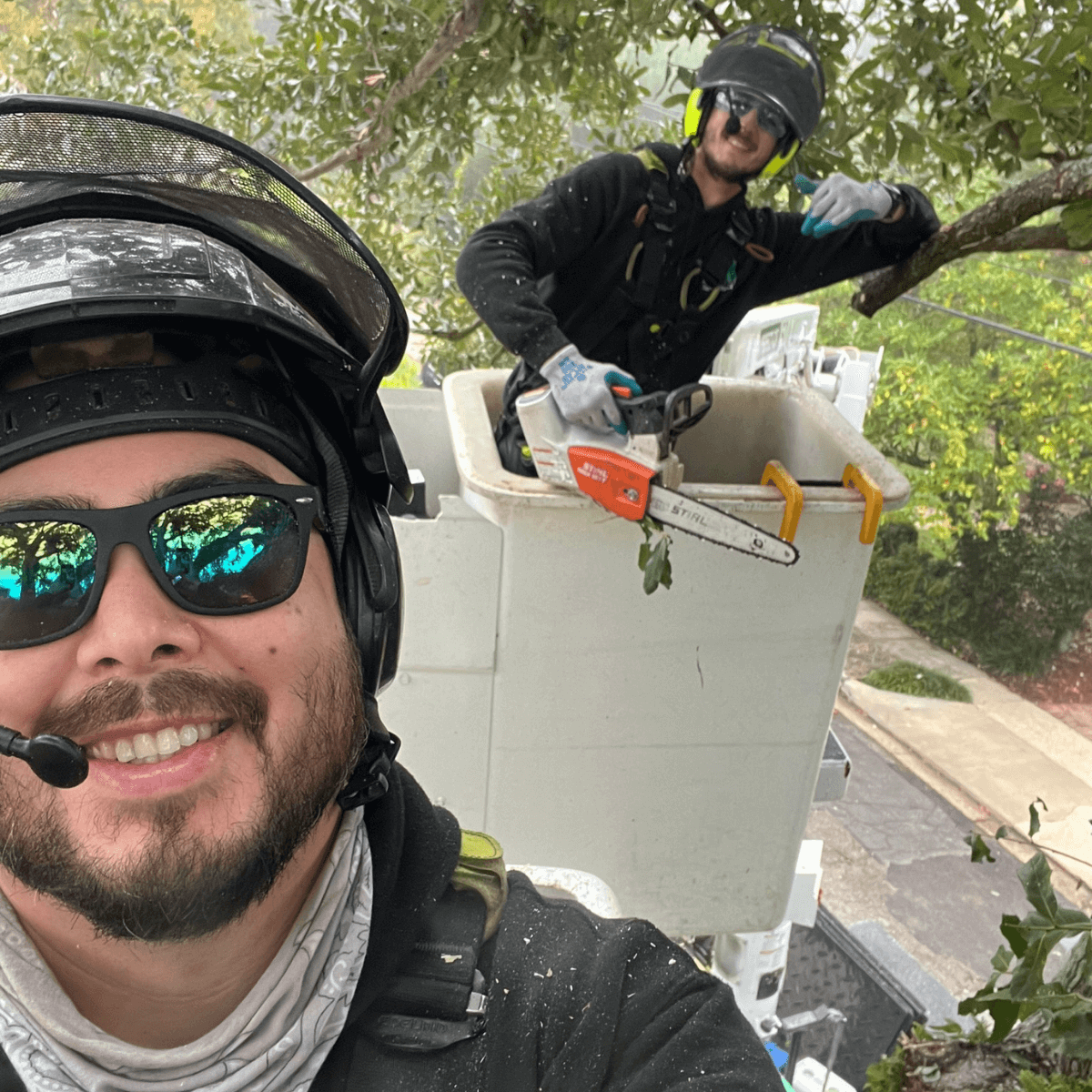
Storm season changes the way people in Metairie look at their yards. A tree that seemed harmless in March can become a serious liability by late summer, when the ground is saturated, winds pick up, and every branch over a roofline starts to look heavier than it did before. In this part of southeast Louisiana, that shift happens quickly. One week a canopy is offering shade over a driveway, and the next it is scraping shingles, leaning harder toward a fence, or dropping limbs after a night of hard rain and gusty wind.
That is why demand for tree removal Metairie rises so sharply during storm season. It is not simply a matter of people wanting cleaner landscaping. It is a matter of risk management, insurance headaches, blocked streets, damaged cars, power outages, and houses taking direct hits from trees that had been declining for years. Once a storm watch goes up, calls start coming in from homeowners who noticed a crack in the trunk months ago, property managers who have dead pines behind apartment buildings, and business owners whose parking lots are lined with mature trees that have not been properly pruned in a long time.
Anyone who has worked around storm cleanup in Jefferson Parish knows the pattern. The busiest periods are rarely random. They are driven by weather, by delayed maintenance, and by the particular way trees grow in our climate.
Why Metairie sees a sharp seasonal spike
Metairie does not need a major hurricane landfall to create tree emergencies. Strong thunderstorms, tropical systems that pass offshore, and prolonged periods of wet weather can all trigger failures. That matters because many property owners think only in terms of named storms, when the real pressure on trees often builds over weeks.
The local environment sets up a difficult equation. Trees grow fast here. Warm temperatures, long growing seasons, and regular rainfall push canopies outward and upward. At the same time, many neighborhoods have older homes, mature oaks, aging pines, ornamental species planted too close to structures, and compacted soils that do not always support deep, stable root systems. Add drainage issues, narrow side yards, utility lines, and fences packed tightly along lot lines, and even a relatively modest tree problem can turn into a technically challenging removal.
Storm season exposes those weaknesses. Saturated ground reduces root grip. Wind exploits asymmetrical canopies and existing decay pockets. Limbs that looked solid in dry weather become unstable when loaded with water. In practice, that means the same tree can behave very differently in July than it did in January.
I have seen homeowners be genuinely surprised by how fast conditions shift. A live oak may have tolerated years of neglect, then lose a major leader after a heavy rain and a squall line. A pine that stood straight all spring may start to heave at the base after repeated wet weeks. A hackberry with hidden internal decay might split without much warning at all. These are not unusual cases. They are common enough that reputable crews in the area often prepare for a flood of calls as the weather pattern becomes more active.
The difference between trimming and removal becomes clearer in storm season
For much of the year, pruning can address a large share of tree concerns. Selective thinning, deadwood removal, crown reduction in specific cases, and clearance from structures often lower the chance of branch failure. During storm season, though, there is less tolerance for uncertainty. If a tree shows substantial structural defects, removal moves to the front of the conversation.
That distinction matters because property owners often hope to save a tree, even when the odds are poor. That instinct is understandable. Mature trees add value, shade, and character. They cool homes, soften streetscapes, and take decades to replace. The problem is that a declining tree close to a roof, bedroom, power service, or frequently occupied area is not just a horticultural issue. It is a hazard calculation.
A healthy tree with one overextended limb might need corrective pruning. A tree with root plate movement, a split trunk, extensive decay, fungal growth near the base, or repeated large limb failures is often a removal candidate. Storm season puts urgency behind those decisions because the cost of waiting rises quickly. A planned removal on a clear day is almost always simpler and less expensive than an emergency extraction after a storm, when access is poor, debris is tangled into structures, and crews are booked solid.
What property owners start noticing when the weather turns
Most people do not call for tree removal the first time they see a few leaves drop or bark peel. They call when several warning signs begin to stack up, especially as storm forecasts become more frequent. During the active season, the concerns tend to be practical and immediate.
- A tree starts leaning more than it did before, or the soil at the base appears lifted or cracked.
- Large dead limbs hang over the roof, driveway, street, or a neighbor’s fence.
- Mushrooms or decay are visible around the trunk flare or major branch unions.
- Limbs have already fallen in smaller storms, suggesting deeper structural weakness.
- The canopy is entangled with service lines or grows too close to the house for safe failure.
Those signs do not always mean the tree must come down, but they justify a professional assessment. The timing matters. Once a storm is two days away, options narrow. Many companies stop nonessential work, emergency demand spikes, and homeowners are left hoping a borderline tree holds together through the event.
Emergency work costs more, and that drives seasonal demand too
One reason storm season increases demand for tree removal Metairie is simple economics. Homeowners know, or quickly learn, that emergency service is expensive. A scheduled removal with clear access, dry ground, and room for equipment may be straightforward. The same tree after a storm can require tarps, roof protection, rigging over structures, traffic control, utility coordination, and far more labor.
That difference can be dramatic even without assigning exact numbers. Pricing depends on height, species, access, risk, crane use, debris hauling, stump work, and whether the tree is already on a structure. But in general, emergency removals ask more of everyone involved. Crews work around unstable loads, hidden tension in broken wood, slippery surfaces, and damaged property. Insurance processes may also slow decisions and complicate scope.
Property owners who have been through it once tend not to wait a second time. They remember the downed fence, the blocked driveway, the leaking roof, the hotel stay, and the days spent trying to find a crew when every phone in town was ringing. That memory alone fuels preventative removals as each storm season approaches.
Saturated soils are often the hidden problem
Wind gets most of the attention, but water does just as much damage in many cases. Trees fail from the ground up as often as they fail from the top down. In Metairie, where drainage conditions vary by block and some lots stay wet long after rain passes, root stability becomes a major issue.
A tree does not need to be rotten to fall. It only needs to lose enough anchorage. Repeated rainfall softens the soil and weakens the root-soil bond. If the root system was already constrained by construction, trenching, compaction, or past grade changes, the margin for safety may be thin. Then a storm arrives, wind pushes against a full summer canopy, and the whole root plate shifts.
This is why some trees topple with green leaves still attached. To the untrained eye, they looked healthy. In reality, their visible foliage masked a below-ground stability problem. That disconnect creates a lot of frustration for homeowners. They assume a green tree is a safe tree. It is not always so.
Live oaks can be remarkably resilient, but even they can fail if roots have been damaged over time or if the tree developed poor structure. Water oaks, pines, and certain ornamental species may be less forgiving. Species matters, but site conditions matter just as much.
Dense neighborhoods make every removal more complicated
Tree work in Metairie is rarely done in wide-open conditions. Houses sit close together. Rear-yard access can be limited. Sheds, pools, fences, patios, and overhead lines leave very little room for error. That reality becomes more important in storm season because the trees most likely to worry homeowners are often the ones hanging over something valuable.
A tree in a rural field can sometimes be dropped in one piece. A tree between two homes usually cannot. It must be dismantled carefully, section by section, often using ropes, pulleys, and controlled rigging to keep wood off roofs and utilities. If the ground is wet enough that heavy equipment cannot enter without causing damage, the crew may need to climb, use a spider lift, or bring in a crane if access allows.
Those constraints affect scheduling. During quieter months, a company may be able to accommodate complicated jobs in a reasonable window. Once storms enter the picture, the backlog grows and the safest crews become harder to book. Homeowners who understand how tight Metairie job sites can be are often quicker to authorize preventive work before the seasonal rush peaks.
Insurance concerns shape decisions more than people expect
Homeowners do not usually think about insurance until something has already gone wrong, but storm season has a way of forcing the issue. Adjusters and carriers look closely at maintenance, visible defects, and whether damage might have been foreseeable. Policies differ, and no one should assume coverage without reading the details, but one pattern is easy to recognize: obvious neglected hazards can create avoidable disputes.
If a tree was clearly dead, severely decayed, or already failing before the storm, the post-loss conversation gets harder. That does not mean every claim will be denied, but it does mean documentation matters. A professional assessment before storm season can be useful for more than deciding whether to remove a tree. It establishes the condition of the tree at a point in time and helps property owners make a reasoned maintenance choice.
For landlords and commercial property owners, this issue is even sharper. When tenants, customers, or employees are on site, the duty to address visible hazards is not abstract. A large compromised tree over a parking area or walkway is a known exposure. Storm season merely increases the probability that the exposure becomes an actual incident.
Utility conflicts become urgent fast
Power lines add another layer of pressure. Many storm-related tree calls are not about a tree that has already fallen through a roof, but about one that is threatening service drops or neighborhood distribution lines. A limb rubbing a line in fair weather can become an outage in rough weather. A partially uprooted tree can turn a precautionary issue into a public safety problem.
This is one of the places where homeowners need to be careful. Not every tree near a line is something a private crew should touch without coordination. Utility-owned lines, service drops, and line-clearance practices involve separate responsibilities. Good tree companies know where their scope ends and when utility involvement is necessary. During storm season, that coordination becomes more important because rushed decisions around energized lines can go badly in a hurry.
The practical effect is that trees near utilities often get prioritized earlier. Even if the tree itself is not likely to strike the house, the inconvenience and safety issues tied to electrical service are enough to move removal from the someday category into the now category.
Preventive action usually follows a familiar timeline
Demand tends to rise in stages. Early in the tree removal metairie season, organized homeowners schedule inspections and remove obvious hazards before forecast activity builds. As the weather pattern intensifies, hesitant owners start calling after every wind event. Once a tropical system enters the Gulf, panic sets in, and the same companies that had open slots weeks earlier are suddenly overloaded.
The most prepared property owners usually handle storm-related tree risk in a short sequence:
- inspect older or high-risk trees before peak storm activity
- remove dead, dying, or structurally unsound trees early
- prune trees that can be made safer without removing them
- clear access routes so crews can work efficiently if needed
- keep records, photos, and any written recommendations
That sequence is not glamorous, but it works. It turns reactive decision-making into planned maintenance. More importantly, it protects the homeowner from having to make expensive choices under deadline pressure when the weather forecast is getting worse by the hour.
Certain trees draw more attention than others
Not every species raises the same concern. In Metairie, large oaks often dominate discussions because they are valuable, mature, and frequently close to homes. Many can be preserved with proper care, but when an oak develops deep decay, poor branch attachments, or root failure, the stakes are high simply because of its size. A bad oak failure can crush a carport, cave in part of a roof, or wipe out a section of fencing along multiple properties.
Pines are another frequent source of calls, especially where they have outgrown their surroundings or were planted in rows that never received appropriate thinning or monitoring. Tall pines can fail dramatically in saturated conditions and high winds. Homeowners are often uneasy about them because the target zone is large and the fall path can affect more than one lot.
Then there are the smaller ornamentals that seem less threatening but create recurring trouble. Bradford pears, weak-wooded species, and neglected backyard trees can split and scatter debris across patios, sheds, and fences. These jobs may not make the evening news, but they fill schedules quickly after storms because the volume is so high.
The human side of storm-season removals
The technical reasons behind seasonal demand are clear enough, but the emotional side should not be ignored. Trees are not just objects in a yard. They mark family milestones, shade outdoor gatherings, and define the appearance of a home. People hesitate to remove them for good reason.
I have watched homeowners stand beside a failing tree and tell stories about a swing that hung from one branch or a child’s graduation photos taken under the canopy. Those attachments are real. A professional approach respects that. Good advice is not about removing every tree that makes someone nervous. It is about balancing preservation with realistic risk.
Sometimes the right call is to keep the tree and reduce the canopy. Sometimes the right call is to monitor it for another season. And sometimes, especially before or during storm season, removal is the responsible choice because the probability of serious damage is too high. Experience helps draw that line. So does local knowledge. Trees in Metairie do not grow under generic conditions, and they should not be evaluated as if they do.
Why timing matters more than many homeowners realize
When people search for tree removal Metairie during storm season, they are often already late to the decision. That does not mean nothing can be done, but it does change the options. Once ground conditions worsen and schedules tighten, even a willing contractor may have to delay lower-priority work. If a storm is imminent, crews may focus only on immediate hazards and emergency response.
There is also the matter of cleanup capacity. After major weather, disposal sites get busy, hauling slows down, and neighborhoods become cluttered with debris. A job that would have taken one day in calmer conditions can stretch out because every part of the system is under strain. Homeowners feel that difference in cost, wait time, and stress.
The smarter window is usually before urgency arrives. Not months after a tree has started declining, and not the evening before landfall projections sharpen. Earlier. When there is time to inspect, think, compare approaches, and choose a contractor based on competence rather than desperation.
Storm season does not create all tree problems, but it reveals them
That is the heart of the issue. Storms rarely invent weaknesses from nothing. More often, they expose what was already there: a cavity hidden behind bark, a root system compromised by years of construction, a codominant stem with included bark, a dead top that no one noticed from the street, or a tree planted in a space it was always going to outgrow.
Metairie’s weather simply speeds up the reckoning. The combination of heat, moisture, dense development, and seasonal storms puts every neglected tree issue on a faster clock. That is why demand for removals rises so sharply when storm season rolls around. Homeowners are not suddenly becoming interested in arboriculture. They are responding to visible risk, hard lessons, and the narrow gap between manageable maintenance and expensive emergency damage.
For many properties, the best time to address a dangerous tree is before the forecast gives anyone a reason to panic. Once the season is active, the calculus changes. The same tree that looked like a future project becomes an urgent hazard. In Metairie, that shift happens every year, and it is exactly why storm season keeps tree removal crews so busy.
A Perfect Cut Tree Service
4725 Shores Dr, Metairie, LA 70006
+1 504-732-0779
FAQ About tree removal metairie
What is the average cost of tree removal in my area?
There is no single price that fits every tree. Size, condition, access, nearby structures, equipment, debris hauling and stump work affect the estimate. Request a written, site-specific quote that identifies what is included.
Who will remove trees for free?
Free removal is not generally available for ordinary private-property tree work. Utilities or public agencies may handle trees within their responsibilities. Confirm eligibility directly and do not assume that an offer or assistance program covers your tree.
Can I just cut down a tree in my yard?
Check ownership, location and local requirements first. Jefferson Parish requires a permit for removal of qualifying vegetation in the public right-of-way, and additional protections may apply in designated areas. Ask the parish about your property and have a qualified tree professional assess the work.