Column · @chancedfsd803
Why Homeowners Trust Professional Tree Removal Metairie Teams
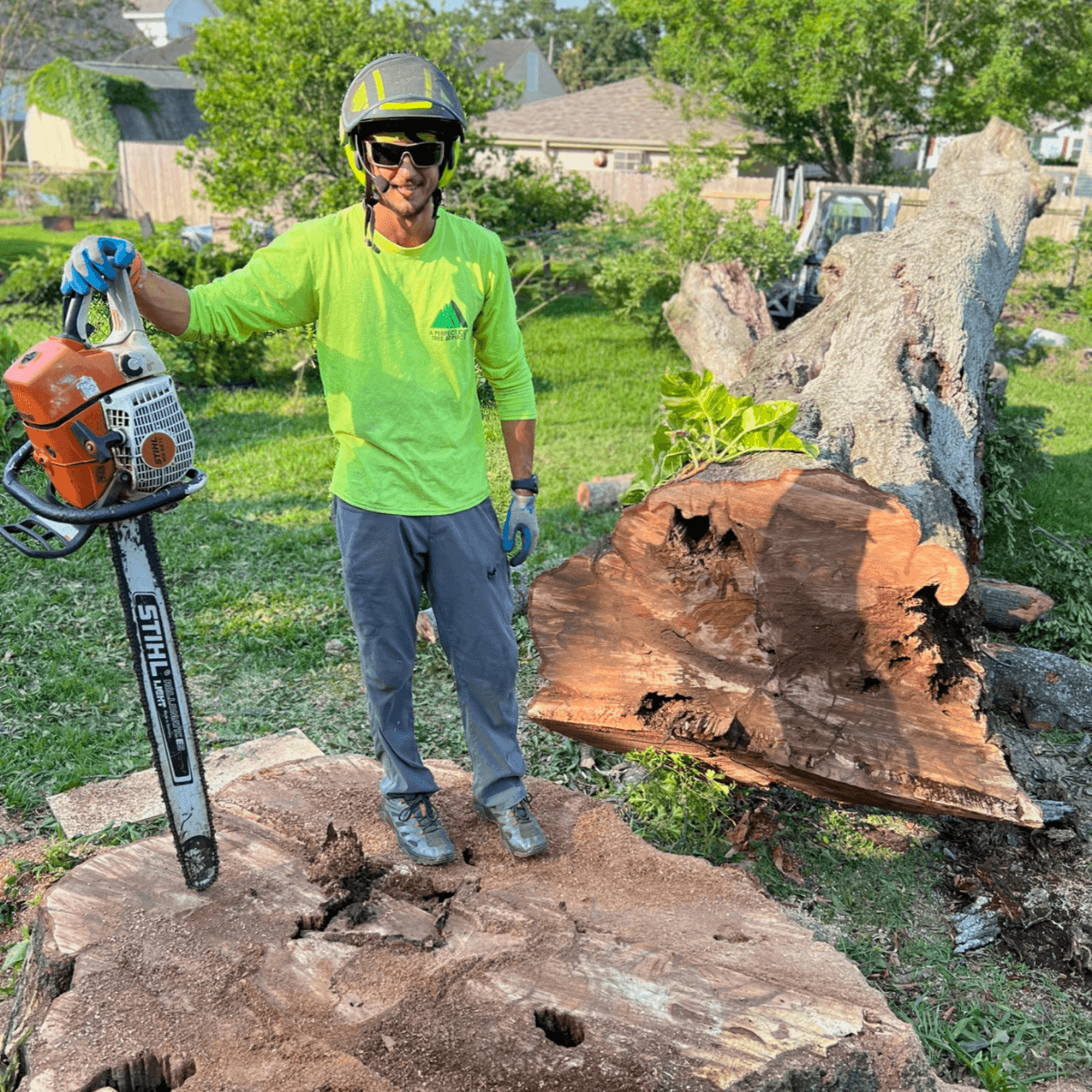


In Metairie, trees are part of the landscape in a very personal way. They shade driveways that bake through long summers, frame older homes with broad canopies, and soften streets that would otherwise feel all concrete and roofline. But the same trees that add value and character can also become serious liabilities. A leaning oak after heavy rain, a split pecan over a garage, a root system pushing toward plumbing lines, a dead pine dropping limbs over a neighbor’s fence, none of those problems stay small for long.
That is why homeowners tend to place a high premium on experience when a tree has to come down. Tree removal is not yard work. It is controlled risk. It involves structural judgment, specialized equipment, and an understanding of how trees fail under tension and weight. In a place like Metairie, where homes often sit close together and storm season is never just an abstract concern, the margin for error is thin.
People often start with the same question: can this tree be trimmed, braced, or treated instead? Reputable professionals ask that too. The best tree removal Metairie companies are trusted not because they rush to cut, but because they know when removal is the right answer and how to do it without turning a property problem into a property disaster.
What trust really means in tree removal
When homeowners say they trust a crew, they are usually talking about more than friendliness or punctuality. They mean the team showed up, evaluated the site carefully, communicated clearly, and carried out difficult work without damaging the house, the fence, the driveway, the flower beds, or the utility lines. They mean the crew inspired confidence before the first cut was made.
That trust is built on visible competence. A seasoned estimator does not glance at a tree and toss out a number from the sidewalk. They walk the property. They look at the lean, the canopy spread, the cavity at the base, the overhead service lines, the access for equipment, and the escape routes for rigged sections. They ask about past storm damage and whether the tree has dropped limbs before. If the trunk is close to a slab or retaining wall, they factor that in. If the rear yard is only accessible through a narrow gate, they explain how that affects labor and removal method.
Homeowners notice this level of care. They can tell when someone is doing real hazard assessment versus giving a fast sales pitch.
Metairie presents tight working conditions
Tree work in wide open rural spaces is one thing. Tree work in an established suburban area is another. Much of Metairie has mature neighborhoods with limited access, closely spaced homes, overhead utilities, and landscaping that owners have invested in over many years. Removing a large tree in that environment is often a piece-by-piece dismantling operation, not a simple felling job.
A professional crew plans around those constraints. If there is no clean drop zone, they rig limbs and trunk sections with ropes, lowering devices, and friction control so each piece comes down under control. If the tree overhangs a roof, they may climb and remove the canopy in small segments first, reducing weight before taking down the main stem. If access allows, they may bring in a crane, but that decision depends on the tree’s condition, swing radius, ground bearing capacity, and nearby structures.
That matters because a homeowner usually cannot evaluate these technical choices on their own. What they can evaluate is the outcome. Was the job done safely? Did the crew protect the property? Did they avoid tearing up the lawn with heavy machinery after a rainy week? Were they prepared for the realities of the site? Those are the details that turn a one-time customer into someone who recommends a company to neighbors.
Storm risk changes the stakes
In southeast Louisiana, weather is never a side note. Even outside named storms, saturated soil and fast-moving summer systems can expose weaknesses quickly. Homeowners know this from experience. A tree that seemed fine in April can look very different after repeated rain, high winds, and one hard lightning strike.
Professional tree removal teams understand how local weather patterns affect structural stability. They know that root plates can loosen in wet ground, especially with shallow-rooted species or trees already compromised by decay. They know that included bark, old storm splits, and dead upper crowns often become failure points when winds start pushing canopies from multiple directions. They know that some trees will hold together until they do not, and then the failure is sudden.
This local awareness builds trust because it is practical, not theoretical. A good company does not need dramatic language to explain urgency. They can point to the crack running down the scaffold limb, the fungus fruiting near the root flare, the heaving soil on one side of the trunk. They can explain why waiting another season may be reasonable in one case and reckless in another.
I have seen homeowners hesitate because the tree had sentimental value, which is understandable. A live oak planted when children were young carries history. But the best crews are honest about trade-offs. If the tree can be reduced and monitored, they say so. If the decay has progressed too far and the tree is hanging over bedrooms or a neighbor’s parked cars, they say that too. Clear judgment earns trust faster than sales pressure ever will.
The equipment gap is larger than most people think
From the street, tree removal can look straightforward. There is a chainsaw, a truck, a few workers in helmets, and wood starts coming down. What homeowners may not see is how much specialized equipment separates a professional operation from a risky amateur one.
The crew may be using climbing saddles, rigging ropes rated for specific loads, blocks and pulleys to redirect force, lowering devices to control descent, saws matched to wood size and cut type, personal protective equipment, stump grinders, and sometimes cranes or bucket trucks. Just as important, they know the limits of each tool and when not to use it.
A common misconception is that bigger equipment automatically means a better operation. That is not always true. On some Metairie lots, a compact, skilled climbing crew causes less disruption than a large machine trying to squeeze through a side yard. On the other hand, a crane can dramatically reduce risk and time when a tree is dead, brittle, or suspended over structures. The judgment call is where experience shows.
Homeowners trust professionals because professionals match method to conditions. They do not force a favorite setup onto every property. They adapt.
Insurance and liability are not boring details
Most homeowners never think much about contractor liability until something goes wrong. With tree removal, that is backwards. Liability should be considered before the first branch is touched. If a large limb crashes through a roof, if a worker gets hurt, if a neighbor’s car is damaged, or if a service line is struck, the financial consequences can be immediate and messy.
A legitimate tree removal company understands that insurance is not just paperwork. It is part of being prepared to take on high-risk work responsibly. Homeowners often trust established teams because those businesses are accustomed to providing proof of coverage, documenting the scope of work, and explaining what is and is not included in the price. That professionalism lowers anxiety.
It also signals something deeper. Companies that invest in proper coverage, trained crews, and maintained equipment are generally operating with a long-term mindset. They expect scrutiny. They plan for contingencies. They are less likely to disappear after a bad day.
This matters especially in neighborhoods where one mistake can affect several properties at once. A poorly controlled removal does not always stop at the fence line.
Experience shows up in the small decisions
Anyone can say they remove trees. Fewer people can explain why they are taking the top first instead of the lateral limbs, why they are leaving a spar tree removal metairie for rigging, why they are not driving a heavy truck onto a wet lawn, or why the stump should be ground below grade in one area but left slightly proud in another because of utilities.
These decisions sound minor until they are not. An experienced crew leader is constantly reading the job. Is the wood sound enough to tie into? Is the wind picking up? Is the drop zone still safe now that brush has accumulated? Will one more swing over the driveway risk cracking decorative concrete? Should the final trunk sections be lowered instead of free-dropped because of vibration near the slab?
Homeowners may not know the technical language, but they recognize foresight. They see when a crew pauses to reset the work plan instead of rushing. They hear the difference when communication is crisp and calm rather than chaotic. One of the clearest markers of professionalism is how uneventful the job feels from the homeowner’s perspective. No drama, no avoidable surprises, no property damage, no argument at the end about cleanup.
Cleanup is part of the service, not an afterthought
A removal job is not finished when the tree is on the ground. For many homeowners, trust is cemented during cleanup. Brush has to be chipped or hauled off. Logs may need to be cut to lengths the owner can keep or to pieces manageable for removal. Sawdust, twigs, and bark need attention. If stump grinding is included, the resulting mulch pile should be addressed clearly, either spread, removed, or left by request.
This is one area where expectations need to be discussed upfront. Some homeowners assume every service includes complete debris haul-off, rake cleanup, stump grinding, and surface restoration. Some proposals include those items, some price them separately. The best companies explain the scope in plain language so nobody is surprised later.
A crew that leaves a site orderly earns goodwill fast. A crew that leaves ruts, wood chips scattered through flower beds, and half a brush pile at the curb can turn a technically successful removal into a frustrating experience. Homeowners remember both.
Price matters, but not in the way many expect
Tree removal costs can vary widely, and there are good reasons for that. A small ornamental tree in an open front yard is a very different job from a decaying 70-foot tree boxed in by a house, power lines, and a masonry wall. Access, species, diameter, height, condition, rigging complexity, disposal volume, and equipment needs all affect price.
Professional teams earn trust when they help homeowners understand what they are paying for. The lowest bid can be tempting, especially when multiple quotes differ by hundreds or even thousands of dollars. But low price often means corners somewhere: no insurance, undertrained labor, minimal cleanup, or a removal plan that assumes luck will cover what skill does not.
There are times when a higher estimate reflects a smarter method. Bringing a crane, for example, may cost more than climbing and piecing a tree down manually. Yet in the right setting it can shorten the job, reduce exposure over a roof, and lessen lawn damage from repeated dragging. A homeowner who hears that explanation from a thoughtful estimator is more likely to trust the company, even if the price is not the cheapest on paper.
A useful way to think about quotes is to compare what is actually being promised:
- Scope of removal, including whether debris haul-off is complete
- Protection measures for lawn, driveway, roofline, and nearby structures
- Stump grinding and surface cleanup details
- Proof of insurance and who is performing the work
- Timeline, access plan, and any conditions that could change the price
Those five points often reveal why one proposal feels more credible than another.
Homeowners value honest advice about whether removal is necessary
Not every risky-looking tree needs to come down, and not every healthy-looking tree is actually safe. This is one reason homeowners gravitate toward reputable companies with arboricultural judgment, not just cutting ability. They want someone who can distinguish between cosmetic defects and structural failures, between a tree that can be pruned and monitored and one that has crossed into unacceptable risk.
Sometimes the most trust-building answer is, “Not yet.” If a tree has deadwood and poor branch structure but a sound trunk and root system, selective pruning and reduction may buy years of safe service. If roots are lifting pavement but the canopy is stable, the homeowner may have options beyond immediate removal. On the other hand, basal decay, major trunk cavities, root plate movement, and active splitting usually leave little room for optimism.
This honesty matters because tree removal is emotional as well as practical. Mature trees provide shade, privacy, and identity. People sit under them, decorate around them, and attach memories to them. A company that acknowledges that human side, while still being clear-eyed about safety, tends to earn lasting trust.
Emergency work reveals who is truly prepared
Routine removals are one thing. Emergency removals after a storm are something else entirely. That is when companies are tested under pressure. Phones are ringing nonstop, access is difficult, weather may still be unstable, and homeowners are scared because a tree is on the roof or hanging over a child’s room.
Professional tree removal Metairie teams stand out in these moments because they triage intelligently. They know the difference between debris that is inconvenient and a tree under tension that could kill someone if cut carelessly. They stabilize the situation first. They coordinate when utilities are involved. They do not let urgency become recklessness.
A fallen tree after a storm often creates hidden hazards. Limbs can be spring-loaded. Trunks can be pinched under structural weight. Damaged roofs can collapse further during removal. Fences and sheds may be holding wood in unstable positions. The crews that homeowners trust are the ones who slow the scene down enough to make it safe.
When a company handles a storm emergency well, word spreads quickly in a neighborhood. People remember who answered, who arrived prepared, and who managed a bad situation with control.
Communication matters more than marketing
A polished website can help a company get noticed, but trust usually grows through direct communication. Homeowners want calls returned, arrival windows respected, and recommendations explained in plain terms. They want to know whether the gate needs to be unlocked, whether cars should be moved from the driveway, whether the crew will need access to a neighbor’s yard, and what level of noise and disruption to expect.
The companies that keep homeowners informed tend to be the ones that avoid conflict. They explain delays caused by weather. They discuss the possibility of hidden metal in an old trunk, buried utilities near the stump, or decay that may alter the removal plan once climbing begins. They are upfront about what can and cannot be guaranteed, especially where storm damage or unstable wood is concerned.
Good communication also extends to neighbors. On tight lots, a simple heads-up about a crane, chipper noise, or temporary access can prevent tension. Professional crews understand that tree removal takes place in communities, not in isolation.
Why local reputation carries weight
In a service category built on risk, local reputation is hard-earned and highly valuable. Homeowners talk. They compare stories about cleanup, pricing clarity, crew behavior, and whether the company respected the property. In places like Metairie, where neighborhoods are interconnected and many homes share similar lot challenges, referrals often matter more than advertising.
A company that has handled multiple removals on the same street has already shown it can work around the local conditions. It has likely dealt with the narrow access, mature oaks, low utility lines, and drainage-sensitive yards that define many residential jobs in the area. That familiarity reduces uncertainty for the next homeowner who calls.
Trust is also reinforced when a business has consistency. The same standards, the same professionalism, the same follow-through. Homeowners are not only choosing a crew for one tree. They are choosing who they will call again after the next storm, the next diseased limb, or the next property improvement project that requires a tree to be removed safely.
Signs homeowners look for before they hire
Even when people are not tree experts, they tend to notice a reliable set of signals. They listen to how a company talks about safety. They pay attention to whether the estimate feels rushed. They ask whether the proposal addresses cleanup and stump work. They notice whether the crew arrives with organized equipment or seems to be improvising.
The strongest indicators are usually simple:
- The assessment is detailed and specific to the property
- The company explains risks without resorting to scare tactics
- Paperwork, pricing, and scope are clear
- The crew protects the site and communicates throughout the job
- The property is left in good condition when the work is done
Those fundamentals are not flashy, but they are what trust rests on.
The real reason professionals are trusted
At the core, homeowners trust professional tree removal teams because the work sits at the intersection of danger, property value, and personal peace of mind. A mature tree can weigh many tons. One bad cut can damage a roof, crush a vehicle, injure a worker, or create a dispute with a neighbor. Most homeowners know enough to know what they do not want to gamble with.
What they are buying is not simply tree cutting. They are buying judgment under pressure, technical skill, respect for the property, and a plan that accounts for what could go wrong before it does. In Metairie, where storms, tight lots, and mature trees routinely complicate the picture, that professionalism becomes even more valuable.
The teams that earn trust are usually the ones that make difficult work look controlled. They do not oversell. They do not guess. They evaluate, explain, protect, and execute. When the last log is hauled away and the yard is clean, the homeowner is left with something more important than an empty space where a tree once stood. They are left with the sense that the job was handled the right way, by people who understood exactly what was at stake.
A Perfect Cut Tree Service
4725 Shores Dr, Metairie, LA 70006
+1 504-732-0779
FAQ About tree removal metairie
What is the average cost of tree removal in my area?
There is no single price that fits every tree. Size, condition, access, nearby structures, equipment, debris hauling and stump work affect the estimate. Request a written, site-specific quote that identifies what is included.
Who will remove trees for free?
Free removal is not generally available for ordinary private-property tree work. Utilities or public agencies may handle trees within their responsibilities. Confirm eligibility directly and do not assume that an offer or assistance program covers your tree.
Can I just cut down a tree in my yard?
Check ownership, location and local requirements first. Jefferson Parish requires a permit for removal of qualifying vegetation in the public right-of-way, and additional protections may apply in designated areas. Ask the parish about your property and have a qualified tree professional assess the work.